

Fishing with Go Fish Africa in Mossel Bay
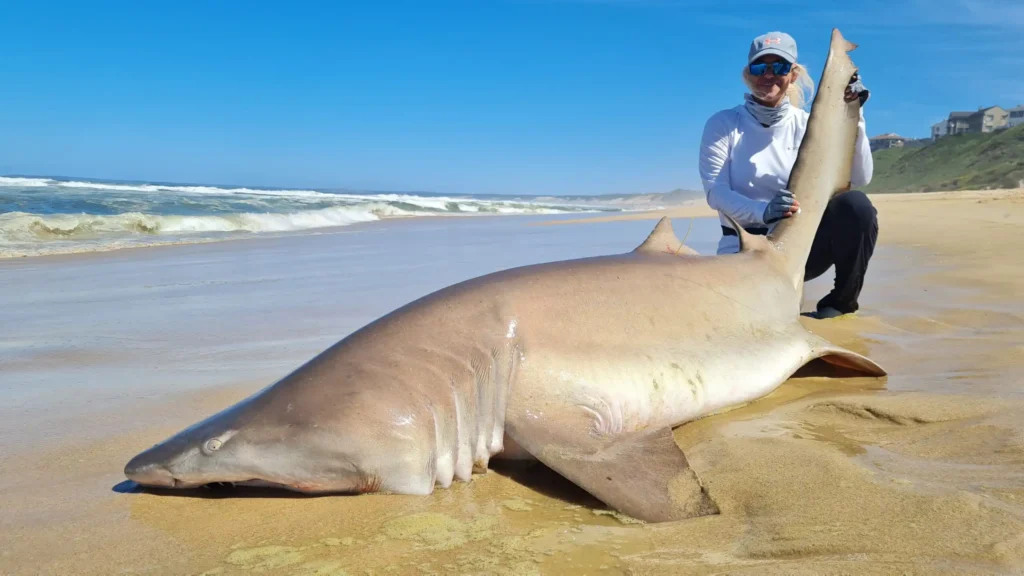
Mossel Bay Classic Shore Fishing Escape
This Go Fish Mossel Bay Classic experience is a fully guided Mossel Bay rock-and-surf fishing with the logistics, tackle and transfers already handled.
A comfortable stay in Mossel Bay, close to restaurants and the town centre, just a few kilometres from the ocean. You'll be booked into a Bed and Breakfast ...
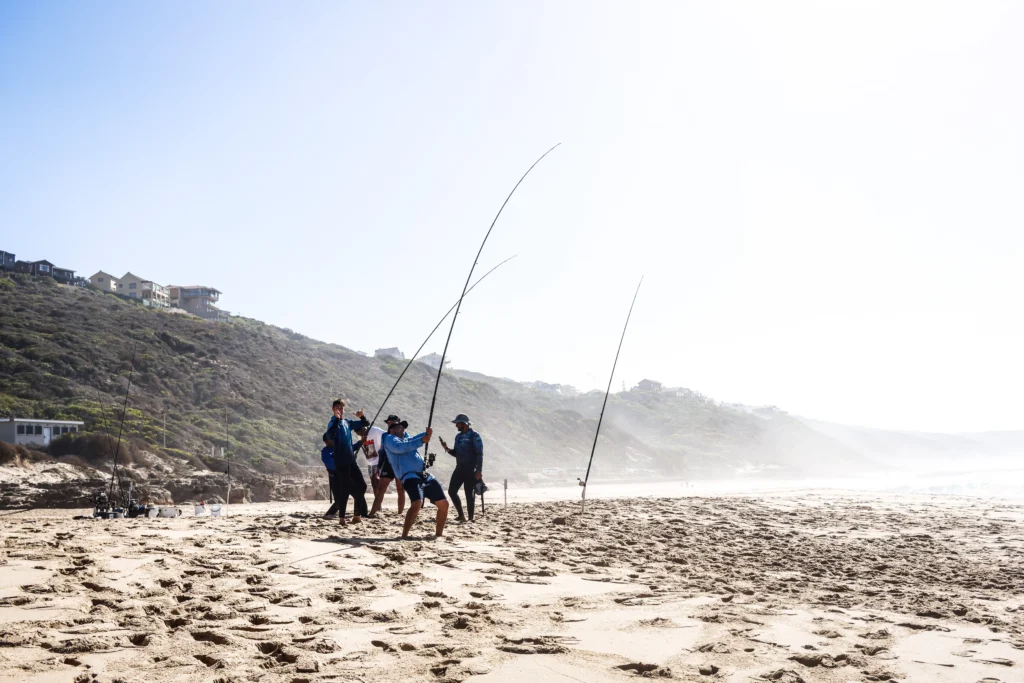
Mossel Bay Signature Harbour Fishing Escape
Combine serious South African shore fishing with the additional comfort of a quality Mossel Bay harbour-front stay. The Signature Harbour Fishing Escape includes the full Go Fish Africa guided fishing experience, specialised tackle and bait, licences, fishing transfers, packed lunches and refreshments while upgrading your accommodation to a recognised hotel ...

Cape Vacca Exclusive Private Reserve Fishing Expedition
Available for only a few weeks each year, this extremely limited expedition offers seven nights and six days of fishing from a luxury private reserve at Cape Vacca. Your stay is full board, with all meals included.
Here, the fishing is on your doorstep. Fish around the clock for trophy sharks, ...
Mossel Bay: Where 162,000 Years of Human History Meet the Indian Ocean
There are coastal towns with history, and then there is Mossel Bay.
Situated at the western gateway to South Africa’s famous Garden Route, Mossel Bay is much more than beautiful beaches, a working harbour and spectacular views over the Indian Ocean. This remarkable stretch of coastline tells a human story extending back approximately 162,000 years – long before ships rounded the Cape, towns were built or the Garden Route appeared on a tourist map.
Today, Mossel Bay combines ancient archaeology, indigenous heritage, Portuguese maritime history, historic architecture, beaches, marine life, outdoor adventure and a fishing tradition that remains part of the town’s identity.
For visitors exploring South Africa’s southern coastline, it is one of those rare destinations where history, culture, nature and adventure occupy the same few kilometres of coastline.
And for anglers, the story becomes even more interesting.
Before Mossel Bay Had a Name: The Origins of Modern Human Behaviour
Mossel Bay’s story does not begin with European explorers.
It begins tens of thousands of years earlier.
The Pinnacle Point Site Complex, situated on the cliffs overlooking the ocean near Mossel Bay, contains some of the world’s most important archaeological evidence relating to the development of modern human behaviour.
In 2024, Pinnacle Point became part of the UNESCO World Heritage property known as The Emergence of Modern Human Behaviour: The Pleistocene Occupation Sites of South Africa, together with Diepkloof Rock Shelter and Sibhudu Cave. UNESCO records evidence from these sites stretching back approximately 162,000 years.
Archaeological discoveries at Pinnacle Point provide evidence of early humans exploiting coastal food resources, working with ochre and developing increasingly sophisticated stone-tool technologies. These discoveries have helped researchers understand how early humans adapted, innovated and survived dramatic environmental change.
This gives Mossel Bay an extraordinary distinction:
People were harvesting resources from this coastline more than 160,000 years before modern visitors began coming here to fish, surf and explore it.
Visit the Point of Human Origins
The archaeological caves at Pinnacle Point can be experienced through organised guided visits. Public access is controlled to protect the World Heritage Site, and tours must be booked in advance. Visitors can descend to Cave PP13B and learn about ancient environments, stone tools, changing sea levels, food sources and the lives of the people who occupied this coastline during the Middle Stone Age.
For anyone interested in archaeology, anthropology or the origins of humanity, this is arguably one of Mossel Bay’s most important attractions.
Mossel Bay
Mossel Bay
Endless Fishing Opportunities
Endless Fishing Opportunities
Cape St Blaize Light House
Cape St Blaize Light House
The Post Office Tree
The Post Office Tree
Long before permanent European settlement, the southern Cape was home to indigenous communities whose relationship with the landscape included hunting, gathering, livestock and the use of coastal resources.
When Portuguese ships began appearing off this coastline during the late 15th century, they encountered Khoekhoe pastoralists and their cattle.
These encounters are important because Mossel Bay’s history should not be told simply as a story beginning with European “discovery”. People already lived here, understood the landscape and made use of its resources.
Indeed, one of the early Portuguese names associated with the area, Angra dos Vaqueiros – the Bay of Herdsmen – reflected the cattle that early mariners observed ashore.
The arrival of European ships would eventually become part of a much larger process of trade, colonisation and profound social change across southern Africa.
On 3 February 1488, Portuguese navigator Bartolomeu Dias landed in the area of present-day Mossel Bay after becoming the first recorded European navigator to sail around the southern extremity of Africa.
His voyage was searching for a sea route linking Europe with the trading centres of the East.
A freshwater source near the shore made the bay particularly useful to mariners. Later Portuguese voyages would repeatedly use the area as a place to replenish supplies.
Nearly a decade later, in 1497, Vasco da Gama visited on his celebrated voyage to India. The bay became known as Aguada de São Brás – the Watering Place of Saint Blaise.
Mossel Bay was becoming an important stopping point on what would develop into one of the world’s great maritime trading routes.
One of the most unusual historical attractions in Mossel Bay is something remarkably simple:
a tree.
Around 1500, Portuguese commander Pedro D’Ataide left an important letter in a sailor’s shoe attached to or positioned near a large tree at the watering place.
Another Portuguese fleet found the message in 1501.
The idea caught on.
Passing mariners began leaving messages for other vessels to carry onward, effectively creating an early ship-to-ship postal system. Today, the famous Post Office Tree stands within the Bartolomeu Dias Museum Complex and is recognised as a provincial heritage site. Dias Museum | Mossel Bay
A shoe-shaped postbox beside the tree continues the tradition, and visitors can still send mail bearing a special commemorative Mossel Bay frank. Dias Museum | Mossel Bay
Five centuries before WhatsApp, Mossel Bay apparently already had messaging sorted.
Delivery times were admittedly a little less impressive.
The Portuguese names did not last.
By the beginning of the 17th century, Dutch vessels were travelling the same maritime routes.
Historical records attribute the name Mosselbaai to Dutch navigator Paulus van Caerden, who arrived in 1601 and reportedly named the bay after the mussels found along its shoreline.
“Mossel” means mussel in Dutch and Afrikaans.
And so, more than four centuries later, Mossel Bay – literally the Bay of Mussels – remains the name by which the town is known today.
For generations, Mossel Bay’s sheltered waters, freshwater and strategic position made it a natural calling point for ships.
During the 19th century, however, the settlement began developing into a proper town and harbour serving both coastal trade and the agricultural hinterland.
Mossel Bay was officially proclaimed a town in 1848 and became a municipality in 1852. Mossel Bay
For a brief period the settlement was known as Aliwal South, but Mossel Bay ultimately prevailed as the permanent name. South African History Online
The first stone jetty was constructed in the 1850s, helping transform the natural anchorage into an increasingly important commercial harbour. Much of the historic stone architecture still associated with Mossel Bay followed during the late 19th and early 20th centuries.
Few landmarks are as closely associated with Mossel Bay as the Cape St Blaize Lighthouse.
Commissioned in 1864, the lighthouse stands dramatically above the rocky coastline and remains one of the town’s most recognisable landmarks. stblaize.co.za
The surrounding Point area combines several of the elements that define modern Mossel Bay: rugged cliffs, ocean views, restaurants, historic sites, walking trails, surf and excellent vantage points across the bay.
It is also where visitors begin to appreciate just how closely Mossel Bay has always been connected to the sea.
Mossel Bay’s relationship with seafood extends considerably further back than the town itself.
The archaeological record shows that ancient inhabitants were already systematically exploiting marine resources tens of thousands of years ago. Thousands of generations later, the sea continued to support local communities.
As the harbour expanded around the beginning of the 20th century, commercial fishing developed further. Historical research records the establishment of fishing companies and steam trawling operations in Mossel Bay during this period. Springer
Handline fishing, harbour activity and the wider fishing industry became woven into the town’s economic and social history.
Today the commercial harbour remains active, while recreational angling, deep-sea fishing and coastal fishing have become part of Mossel Bay’s tourism offering.
It creates a fascinating continuity:
The techniques, boats and tackle have changed dramatically, but people have been turning to the waters of Mossel Bay for food, adventure and opportunity for an extraordinary length of time.
The early 20th century brought another wave of development.
Expansion of the harbour was accompanied by the arrival of railway connections. The rail link to Cape Town was completed in 1905, during the period when the ostrich-feather boom was driving considerable economic activity in the southern Cape. Mossel Bay
Trade increased, businesses expanded and Mossel Bay evolved from a small harbour settlement into an important regional service centre.
The Old Town still reveals much of this history through its streets and architecture.
Mossel Bay Tourism notes that around 200 original buildings have been conserved in the Old Town, illustrating architectural periods ranging from early settlement through the major expansion between 1870 and 1920. visitmosselbay.co.za
A walk through Bland Street, Church Street, Market Square and the surrounding historic quarter is consequently one of the best ways to experience the town beyond its beaches.
Mossel Bay’s next major evolution was from working harbour town to seaside holiday destination.
From the early 1900s, increasing numbers of holidaymakers began travelling to the coast, creating demand for camping grounds, caravan parks, accommodation and recreational facilities. Mossel Bay
Nearby Hartenbos would become especially important to the region’s holiday culture, and the broader coastline developed into one of South Africa’s best-known family seaside destinations.
Today Mossel Bay combines the character of an established coastal community with the infrastructure of a modern tourism centre.
The sea would once again change Mossel Bay’s economic future during the 20th century.
The discovery of offshore natural gas in 1969 ultimately led to the development of a gas-to-liquids industry near Mossel Bay, adding a significant industrial component to an economy historically based around agriculture, fishing, harbour activity and tourism.
It represents another chapter in the same story:
Mossel Bay has repeatedly evolved because of the resources, geography and opportunities created by its position on the southern African coastline.
Modern Mossel Bay is difficult to describe with a single label.
It is simultaneously a historic town, commercial harbour, holiday destination, fishing centre, residential community, archaeological treasure and outdoor adventure playground.
The greater municipal area now incorporates communities and destinations including Hartenbos, Dana Bay, Great Brak River, Klein Brak River, Friemersheim, Herbertsdale, Glentana and several smaller coastal settlements.
For travellers, that diversity means there is substantially more to discover than a quick stop beside the N2.
Best Historical and Cultural Attractions in Mossel Bay
1. Bartolomeu Dias Museum Complex
The Bartolomeu Dias Museum Complex is the natural starting point for exploring Mossel Bay’s maritime heritage.
Its attractions include:
- The famous Post Office Tree
- The Maritime Museum
- A life-size replica of Dias’s caravel
- The Shell Museum and Aquarium
- The Ethno-Botanical Garden
- The historic freshwater spring
- A Portuguese padrão
- Munrohoek cottages
- A Muslim burial site
- Maritime artefacts and exhibitions dealing with local history
The museum has also recognised the need to present the maritime period within the broader consequences of European expansion and colonisation, helping create a more complete interpretation of the site.
2. Pinnacle Point and the Point of Human Origins
No historical tour of Mossel Bay is complete without understanding Pinnacle Point.
Its UNESCO World Heritage status places Mossel Bay within a story of international significance: the emergence of modern human behaviour itself.
Guided cave visits provide the opportunity to experience the archaeological landscape rather than simply reading about it in a museum.
3. The Post Office Tree
Standing within the Dias Museum Complex, this centuries-old milkwood tree is one of Mossel Bay’s most charming historical landmarks.
Send a postcard from the shoe-shaped postbox while you are there.
Few social-media updates have a 500-year backstory.
4. Cape St Blaize Lighthouse and The Point
The lighthouse and surrounding cliffs offer some of the best coastal scenery in Mossel Bay.
The Point is also an excellent place to combine sightseeing with restaurants, walking and an appreciation of the powerful coastline that shaped the town’s maritime history.
5. Explore Historic Mossel Bay on Foot
Mossel Bay has developed a historical tourist route through the Old Town, taking visitors past buildings and sites illustrating different periods in the town’s development.
Historic Bland Street, Church Street and Market Square reward travellers who are willing to leave the car behind and explore slowly.
6. Explore Local Art and Creativity
Mossel Bay’s cultural story is still evolving.
A growing collection of galleries, studios and creative businesses gives visitors access to local South African art, crafts and contemporary creativity, while the Mossel Bay Art Walk provides another way to experience the town away from its conventional tourist attractions.
7. Discover Hartenbos and the Greater Mossel Bay Area
A short distance from central Mossel Bay, Hartenbos has played an important role in the development of the area’s holiday culture.
Visitors interested in South African cultural history can also visit the ATKV Hartenbos Museum, which focuses on the Great Trek and Afrikaner history.
Exploring the surrounding towns provides a broader picture of the communities that collectively form modern Mossel Bay.
Outdoor Activities and Things to Do in Mossel Bay
History may explain Mossel Bay, but the outdoors is where many visitors fall in love with it.
Walk the St Blaize Trail
The dramatic coastline around Cape St Blaize and towards Dana Bay offers exceptional hiking country.
For particularly adventurous visitors, guided experiences can combine the archaeological caves at Pinnacle Point with sections of the coastal trail – effectively walking through both spectacular scenery and more than 100,000 years of human history.
Spend a Day on the Beach
Mossel Bay and its surrounding coastline offer a remarkable selection of beaches.
Among the best known are:
- Santos Beach
- Diaz Beach
- De Bakke
- Hartenbos Beach
- Klein Brak River
- Beaches towards Dana Bay and the surrounding coastal communities
Several beaches within the Mossel Bay municipal area received Blue Flag status for the 2025/26 season.
Experience the Ocean
The bay lends itself naturally to marine activities.
Depending on season, conditions and operator availability, visitors can enjoy experiences including:
- Boat trips
- Marine wildlife viewing
- Surfing
- Kayaking
- Diving
- Coastal adventures
- Whale watching
- Rock and Surf and Deep-sea fishing
The sea isn’t simply the view in Mossel Bay.
It is part of the destination.
F.A.Q.
MOSSEL BAY
Mossel Bay contains evidence of human occupation and behaviour dating back approximately 162,000 years at the UNESCO-listed Pinnacle Point Site Complex. It was later an important stopping point for Portuguese navigators and developed into a significant southern Cape harbour town.
Portuguese navigator Bartolomeu Dias landed in the area on 3 February 1488 during the expedition that became the first recorded European voyage around the southern extremity of Africa.
The name is generally attributed to Dutch navigator Paulus van Caerden, who visited in 1601. “Mosselbaai” means Bay of Mussels, referring to the mussels found along the coast.
Popular experiences include the Bartolomeu Dias Museum Complex, Pinnacle Point archaeological tours, the Post Office Tree, Cape St Blaize Lighthouse, coastal hiking, beaches, historic Old Town, art galleries, boat trips, marine activities and fishing.
Yes. Fishing has played an important role in Mossel Bay’s history and the town remains a popular base for recreational and deep-sea fishing. Conditions, techniques and target species vary throughout the year, which makes professionally guided fishing particularly valuable for visiting anglers.